A recruitment agency phone system affects far more than whether consultants can make and receive calls.
It influences how quickly candidates and clients receive a response, how accurately conversations are recorded and how much time recruiters spend updating the CRM after every call.
The caller could be a candidate returning a call about a new opportunity, a hiring manager providing interview feedback or a prospective client looking for support with a vacancy. They may also want to rearrange an interview, discuss salary expectations or ask about the next stage of the recruitment process.
These conversations often need to move quickly. A delayed callback could mean a candidate accepts another role, a client contacts another agency or important interview feedback is not acted on promptly.
The best phone systems should connect calls with candidate and client records, reduce repetitive administration and make the next action clear.
What makes a recruitment agency phone system different?
A standard business phone system allows employees to make, receive, hold and transfer calls.
A recruitment agency phone system should support the wider hiring journey.
Recruiters manage a constant flow of conversations involving candidates, clients, hiring managers, interviewers and internal teams. Each call may relate to a particular vacancy, application, interview or placement.
The phone system should therefore help consultants understand who is calling, access the correct CRM record and capture what was agreed.
It should also support outbound activity, missed-call follow-up and reporting across teams, offices and recruitment sectors.
The right platform should support the recruiter before, during and after every conversation.
Here are 10 features to look for when choosing a phone system for your recruitment agency.
1. Does it integrate with the CRM?
Your recruitment CRM contains the candidate, client, vacancy and placement information consultants use throughout the day.
Connecting the phone system with the recruitment CRM brings this information into the call journey.
When an existing candidate or client calls, the system may be able to identify them and connect the conversation with the correct file.
The recruiter can then access relevant information without searching across several systems while the caller waits.
Depending on the CRM integration, it may log incoming and outgoing calls automatically. Call summaries, outcomes and follow-up actions may also remain connected with the appropriate candidate, client or vacancy record.
This creates a more complete communication history and reduces the amount of information consultants need to enter manually after each call.
When comparing recruitment phone systems, ask the provider to demonstrate how the integration works with your CRM and which actions it supports.
2. Does it offer a smart caller pop-up?
When a candidate or client calls, the consultant should not always need to begin by working out who they are.
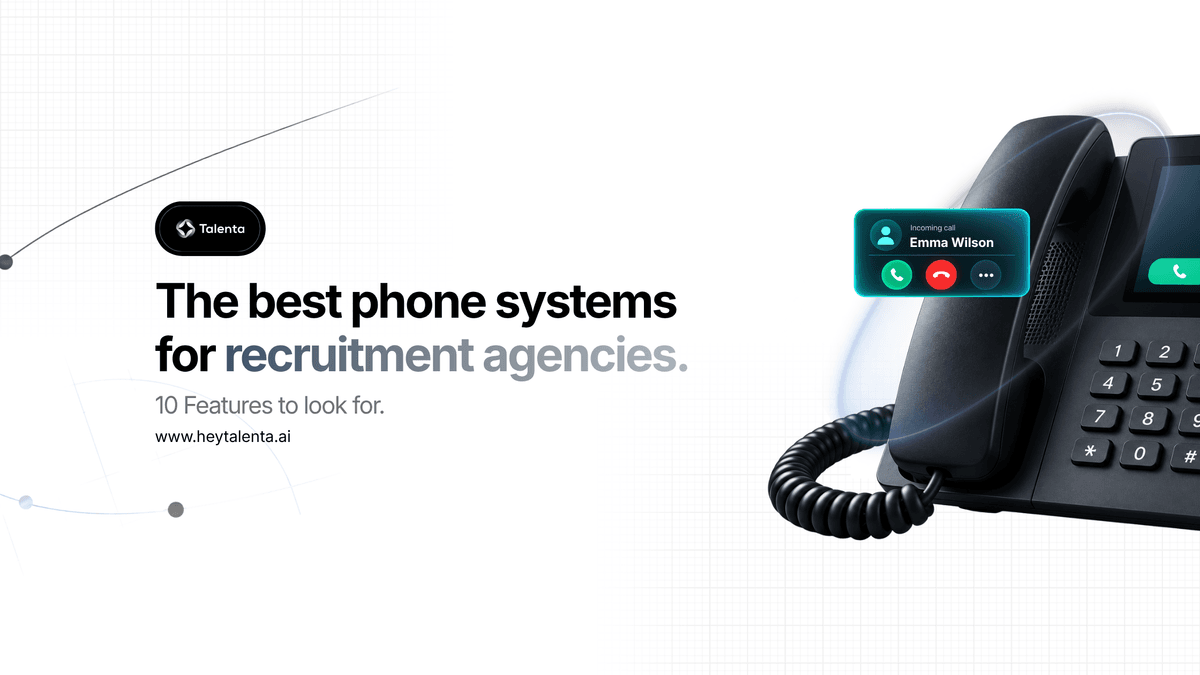
A Smart Caller Pop-Up can display relevant information as the telephone rings.
This might include the caller’s name, whether they are a candidate or client, their current role, linked vacancies, application stage and recent contact with the agency.
The recruiter can then open the complete CRM record in one click.
This provides useful context before the conversation starts.
For example, the consultant may immediately see that the candidate has an interview later that day or that the client recently discussed a particular vacancy.
It can also help when a caller reaches a different consultant from the person they usually deal with. The employee answering has enough information to continue the conversation without asking the candidate or client to explain everything again.
3. Can it provide flexible call routing?
Recruitment agencies receive several different types of calls.
A candidate may need to reach the consultant managing their application. A hiring manager may be calling with feedback, while a new business inquiry may need to reach the appropriate sector or business development team.
A modern recruitment phone system should route calls around the way the agency operates.
This may include separate call routes for recruitment teams, sectors, locations or departments. The system may also provide call queues, ring groups, overflow routes and different processes outside normal opening hours.
For multi-office agencies, calls may be shared across locations when the original office or consultant is unavailable.
The aim should be to help candidates and clients reach the right person without forcing them through an unnecessarily complicated menu.
Call routes should also be easy to update when consultants change teams, working hours are adjusted or new offices are added.
4. Does it record and transcribe calls?
Recruitment calls often contain information the agency may need to review later.
A candidate may discuss their salary expectations, notice period, preferred location or interview availability. A client may provide vacancy requirements, candidate feedback or details about the next stage of the hiring process.
Call recording creates an accurate record of the conversation.
Automatic transcription makes that information easier to use.
Instead of listening to the whole recording, an authorised employee can read or search the transcript to find the detail they need.
This can help confirm what the candidate said about their availability, what feedback the client provided or which action the consultant agreed to complete.
Recordings and transcripts can also support complaint management, quality reviews and recruiter training.
The agency should understand how recordings are stored, who can access them and how long they are retained.
5. Does it produce AI-generated summaries and CRM notes?
Updating the CRM after every conversation can take a significant amount of a recruiter’s day.
A consultant may finish a candidate call and immediately need to speak with a client, prepare someone for an interview or respond to another inquiry.
When workloads are high, CRM notes may become brief, inconsistent or added much later.
An AI phone system can analyse the conversation and create a structured summary.
For a candidate call, the summary may capture their experience, role preferences, salary expectations, notice period and agreed next step.
For a client conversation, it could record vacancy requirements, interview feedback, hiring timescales and the actions expected from the agency.
Where supported by the CRM integration, relevant notes can then be connected with the correct candidate, client or vacancy file.
This reduces repetitive administration and helps the wider team understand what was discussed without relying on memory or handwritten messages.
Recruiters should still be able to review important information and make sure the correct next action is completed.
6. Is there missed call and voicemail tracking?
A missed call could be a candidate returning an urgent call, a hiring manager ready to provide feedback or a prospective client looking for recruitment support.
It should not disappear into a general handset log.
A recruitment phone system should provide a clear view of missed calls and voicemails across the agency.
The team should be able to see who called, when the call was received and whether the number matches an existing candidate or client record.
It should also show whether the call has been returned and whether the inquiry still requires attention.
This distinction matters. An unsuccessful callback does not always mean the conversation has been resolved.
Clear tracking reduces the risk of several recruiters returning the same call or everyone assuming that another colleague has already handled it.
Managers can also use missed-call reporting to identify busy periods, routing problems and areas where additional call coverage may be required.
7. Does it offer candidate, client and call-outcome reporting?
Traditional telephone reports focus on call totals, durations and answer rates.
These figures show how busy the agency is, but they do not show what the conversations achieved.
A modern recruitment agency phone system should help managers understand whether calls resulted in candidate registrations, interviews, new vacancies, client meetings or follow-up actions.
It should also make unresolved inquiries visible.
For example, two consultants may complete a similar number of calls but produce different numbers of progressed candidates, interviews or client opportunities.
Outcome reporting provides more useful context than activity alone.
It can help agencies understand which call types are most common, when candidate and client demand is highest and where opportunities are being delayed or lost.
The objective should not simply be to count calls. It should be to understand what happens because of those calls.
8. Can it provide outbound calling and automatic logging?
Recruitment depends heavily on outbound conversations.
Consultants call candidates about roles, prepare them for interviews, collect feedback and keep them informed throughout the hiring process.
They also contact clients about vacancies, shortlists, interviews and hiring decisions.
A recruitment phone system should keep these outbound calls connected with the same CRM history as incoming calls.
Click-to-dial can allow a recruiter to call directly from the candidate or client record without manually entering the number.
Where supported, the outbound call can be logged automatically against the correct file.
It may also be recorded, transcribed and summarised in the same way as an incoming conversation.
This creates a clearer history for the wider team. When another consultant speaks with the candidate or client, they can see what has already been discussed and which actions remain outstanding.
9. Does it report across multiple consultants and offices?
Call recordings are often reviewed only when a complaint occurs or a manager needs to investigate a particular conversation.
AI call analysis can help recruitment agencies use call data more proactively.
It may provide insight into questioning, active listening, candidate qualification, vacancy discussions and how clearly the consultant agreed the next step.
Sentiment analysis can also help managers understand how candidates and clients responded during conversations.
These insights should support recruiters rather than simply monitor them.
Managers can identify effective calls worth sharing, provide more focused coaching and understand where employees may benefit from additional guidance.
For recruitment groups, reporting should also provide a central view across offices, brands, sectors and teams.
Agency leaders should be able to review call volumes, missed calls, outcomes and performance while still filtering the information by consultant, location or department.
This avoids the need to collect and combine separate reports from each office.
10. Does the AI receptionist answer calls 24/7?
Even a well-resourced recruitment agency cannot answer every call immediately.
Consultants may already be speaking with candidates or clients, attending meetings or conducting interviews. Several calls may also arrive at the same time.
Candidates often return calls during lunch breaks, after work or outside the agency’s normal opening hours.
An AI Receptionist can provide additional call-answering capacity when the internal team is unavailable.
Depending on how it is configured, it may understand why the person is calling, collect candidate or client information and answer approved questions.
It may also transfer selected calls, arrange appointments or interviews and create structured callback requests for consultants.
The AI Receptionist should reflect the agency’s tone, terminology and workflows.
It should understand which calls it can complete and when a recruiter needs to take over.
Its purpose is not to replace recruitment consultants. It provides additional support for suitable routine calls while recruiters focus on relationships, negotiations and decisions requiring experience and judgement.
What is the best phone system for a recruitment agency?
The best phone system for a recruitment agency will depend on its team size, recruitment CRM, call volumes, office structure and plans for growth.
However, the strongest systems have one thing in common: they connect candidate and client conversations with records, actions and outcomes.
And they do more than route calls.
They help consultants understand who is calling, reduce repetitive CRM administration and make outstanding calls easier to manage.
These platforms also give agency leaders a clearer view of why people are calling and what happens after each conversation.
The right recruitment phone system should make every stage of the call easier, from identifying the candidate or client to recording the agreed next step.
How Talenta supports recruitment agencies
Talenta is an AI Phone System and AI Receptionist platform built specifically for recruitment agencies.
The Talenta AI Phone System supports calls answered by recruitment consultants.
When an existing candidate or client calls, a Smart Caller Pop-Up can display relevant information from the recruitment CRM. The consultant can then open the correct file in one click.
Calls can be recorded, transcribed and summarised automatically. This helps capture why the person called, what was discussed and which actions need to happen next.
Where supported by the CRM integration, relevant notes can remain connected with the candidate, client or vacancy record.
Talenta also provides missed-call tracking, sentiment analysis and Intelligence Dashboards, helping recruitment agencies understand call activity, inquiry types, outcomes and team performance.
Additional support with the Talenta AI Receptionist
The Talenta AI Receptionist provides additional answering capacity when recruiters are busy, unavailable or the agency is closed.
It can answer calls, understand why the candidate or client is contacting the agency and follow approved processes.
Depending on the agreed setup, it may collect caller information, answer common questions, transfer calls and create structured callback or appointment requests.
Calls requiring detailed recruitment advice, negotiation or relationship management can continue to be handled by the appropriate consultant.
Agencies can use the Talenta AI Phone System and AI Receptionist separately or combine both products through one connected platform.
Together, they support calls answered by recruiters and calls handled by AI while helping keep candidate information, client conversations and next actions connected.
Choose a system built around the recruitment journey
A recruitment agency phone system should not only help while the telephone is ringing.
Its real value comes from what happens before, during and after the conversation.
Did the consultant know who was calling? Could they access the correct candidate or client file quickly? Was the conversation documented? Is the next action clear?
The best phone systems for recruitment agencies make these answers easier to find.
By connecting calls with the recruitment CRM, consultant workflows and agency reporting, Talenta helps recruitment businesses reduce administration and provide a more consistent candidate and client experience.
Discover how Talenta can connect your calls, recruitment CRM and team performance.
Book a live demo and free quotation today.